
The Journey of a legislation – ‘The American Competitiveness Act in the twenty-first century‘
Since the early 90s, the United States wished to get ahead in the global technology race. This needed research, innovation, and production of goods and services in the computer industry. It was a need in space, defense, automobile industry. This required talent pools that were not locally available in the US. Thus the H-1B visa program was launched by the “Immigration Act of 1990“ by President George H.W. Bush. It was needed by American firms to help with above labor shortages and demands of rapidly expanding industry.
Over the years, the number of H1-B visas kept increasing to cope with the industry’s growth. However, as the number of these visas increased, number of green card (GC) quotas did not. These are required by those wishing to apply for permanent residence (PR). It just added to the queue of H1-B PR hopefuls wishing for a GC. Further processing delays only added to the peril of immigrants trying to build a life in the US. H1-B law also mandated, they were required to leave the US for one calendar year after six years. Thereafter they could apply for a new H1-B and re-enter for a further 6 years. Issues of job portability on a H1-B made it even worse, some employers took undue advantage of the workers. H1-B holders were aggravated by all this, so much so that it started a reverse brain drain. Skilled workers started heading back to their home country, while fresh H1-B visas were being granted to new workers for the same jobs. This was grossly counter-productive, both to the US company and the departing foreign H1-B worker.
By 1998 things got to a head, affected H1-B’s got together and discussed options. These discussions and deliberation pointed only to one recourse, – the H1-B program needed an overhaul. This meant altering policies within the Immigration and Nationality Act (INA). There was a lot of discussion in the media. Also, testimonies from congressional representatives themselves attesting to worker’s plight.
The Immigrants Support Network (ISN) was formed in 1998 as a 501 (c)(3) organization. The intent was to help address the concerns of H1-B workers and help them get stability in their everyday job and life. During its tenure, ISN volunteer staff contacted thousands of affected H1-B visa holders. After listening to their immigration and PR-related concerns, ISN took a position to represent their issues (see brief). Concerns regarding INA had to be raised with members of the 106th US Congress. Relief is possible via provisions being added to immigration bills already under review. If these could not be accommodated a new bill would need to be introduced.
This was achieved by proposing changes via ISN’s Issue Paper. This was shared with all 535 legislators, relevant institutions, and the White House. It required the creation of a suitable adjustment of status program for H1-B workers. There were many immigration-related bills pending passage in Congress. There was even a desire to amalgamate them for the benefit of ISN’s constituents. Some programs suggested that H1-B holders apply for green cards independently of their employers and country quotas, if applicants could prove having worked for a specific period on H1-B. Spouses and children of these H1-B workers could also be included under the program. With ISN’s membership exceeding 15,000 H1-B holders, everyone came together and stepped forward to express concerns to legislators directly.
ISN’s alternatives to address immediate concerns would include
- Extension of H1-B visas beyond the six-year limit if PR/GC was already filed,
- Provide a temporary ‘GC’. This would include all PR privileges to GC hopefuls having received labor certification,
- Removal of the country quota limit on employment-based visas/GCs,
- Allow unused visas in the employment-based category to be carried over to other countries and spill over to subsequent years.
The situation was getting quite stark. In 1999, Georgetown University’s Institute for the Study of International Migration shed further light. The pre-2000 immigration laws would allow less than 25% of H1-B workers to get a green card within six years. This meant 75% would have to leave the US, even though the GC was under process. Leaving the US for one calendar year would disrupt the employer’s work plans due to loss of a trained employee. For the employee, their job security and family plans were at risk!! H1-B workers from India were being hit the hardest. India had over 200,000 visa holders and country quota limits allowed only 9,800 green cards in a calendar year. It would backlog people waiting for a GC exponentially! This and other critical needs had to be addressed and ensure the system did not collapse and create a void of talent pool. To change ground realities, advocacy and lobbying were the only recourse.
As a ISN’s Board member, Vice President, and Head of Congressional Communications, primarily it was my job to come up with a strategy to engage with Congress. Advancing this agenda also involved the White House and several government departments. Concerns of our members had to be communicated to everyone towards the required change. We undertook a unique approach along with our lobbyist. Any hired staff would personally be far removed from the hardships of our members. So instead, we decided to have our affected constituents directly visit congressional offices. They could represent issues far better via ISN’s published manifesto to district and Capitol Hill offices of their representatives. This plan and details were put together by my team as part of a lobbying campaign. This simple approach made a huge difference in the sensitization of congressional staff. Their realistic representation and heartfelt response to any questions on the issue became the winner. Given the personal connection, congressional staff were able to understand their plight firsthand. Thus witnessing the impact of prevailing hi-tech immigration law on human life. This approach made a significant impact and increased their resolve to help affected individuals. ISN received excellent bi-partisan support as well. Late Senator Edward (Ted) Kennedy (D-MA) and Senator Spencer Abraham (R-MI) were the front runners. Many others on the Senate’s immigration committee and other caucuses helped as well.
The above strategy, and media outreach helped share to government, society, and businesses. Issues with H1-B high-tech visas were the talk of the country in no time. Some of the media articles are cited below
- ↓ 28th March 2000 : Forbes – INS Incompetence Incenses Tech Community
- ↓ 15th May 2000 : Wired – Foreign worker debate heats up
- ↓ 16th May 2000 : The New York Times – Coalition urges easing of IM
- ↓ 25th May 2000 : The New York Times – Rethinking the economics of immigration
- ↓ 28th May 2000 : The New York Times – The VC in my bedroom
- ↓ 2nd June 2000 : San Francisco Chronicle (SFGate) – H1-B workers lobby for immigration
- ↓ 5th June 2000 : Computer World – Backlogs keep visas on shelf
- ↓ 17th June 2000 : Washington Post – Immigration gone awry
- ↓ Scan of all ISN Press Articles
- ↓ My Letter to President William J. Clinton
It would be pertinent to add that ISN’s involvement with pro-immigration leadership. Republican Vice Presidential candidate Jack Kemp and Secretary Henry Cisneros rallied pro-immigration forums. This led to the formation and subsequent introduction of Bill S.2045 in the US Senate. It was sponsored by Sen. Orrin Hatch and co-sponsored by Senators Spencer Abraham, Phil Gramm, Bob Graham, Joseph I. Lieberman, Dianne Feinstein, Trent Lott, Don Nickles, Connie Mack III, Arlen Specter, Mike DeWine, Mitch McConnell, Slade Gorton, Chuck Hagel, Robert F. Bennett, Rod Grams, John Ashcroft, Sam Brownback, Gordon H. Smith, and John Warner. S.2045 provided consolidation of all other pending bills with the 106th Congress.
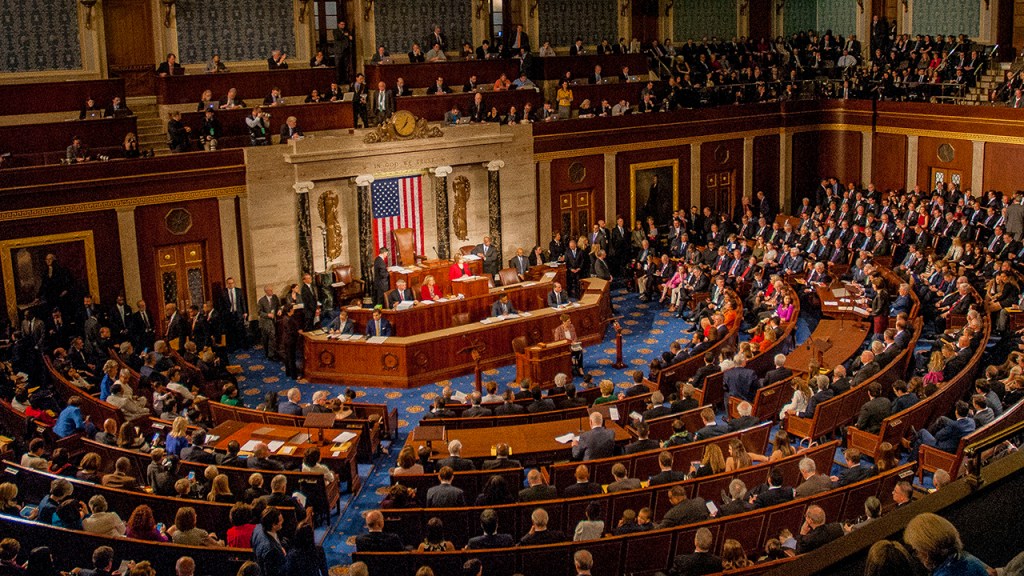
Ultimately, given the sensitization and advocacy campaigns by ISN, Bill S.2045 passed by a majority vote in the 106th Congress. Most issues were addressed. Thus the historic ‘The American Competitiveness Act in the Twenty-first Century ‘ or AC21 came into effect. President William J. Clinton signed it into law (Public Law 106-313). ISN achieved a landmark win for the high-tech H1-B workers first time in US history!!
To quote from the times – ‘In what might have been his last opportunity to pass important immigration legislation, President Clinton signed S. 2045 and H.R. 5362 into law on Tuesday, October 17, 2000. The two bills raise the H-1B cap to 195,000 among other improvements, and raise the INS filing fee by $500.00. While most of the new provisions are effective immediately, the fee increase will not take effect until December 17, 2000. The new law increases the number of H-1B visas available to 195,000 for the years 2001, 2002 and 2003. To remedy the problem of the INS’ “overcount” from the last two years, the law automatically raises the FY 1999 and 2000 caps to accommodate any visa numbers over the old limit attributable to Petitions filed during those fiscal years. Therefore, as of October 1, 2000; the start of FY 2001, there are 195,000 H-1B visas available!
The new law exempts certain workers from the cap altogether. Persons to be employed on H-1B status for higher educational institutions, affiliated non-profit entities, and individuals employed by Governmental and nonprofit research organizations are not counted against the cap. The Immigration and Naturalization Service is also not allowed under the law to count against the cap any person who has been in H-1B status within the previous six years.
The new law makes H-1B status “portable,” allowing for H-1B workers to transfer employers and begin working upon the filing of the new petition, without waiting several weeks for approval, as was previously the case. This provision, however, is effective only for petitions filed on or after October 17, 2000. Additionally, this provision assists beneficiaries of labor certification applications and I-140 Petitions for Immigrant Worker whose applications for adjustment of status are pending in accepting new employment without penalty. If the I-485, adjustment of status application, has been pending more than 180 days, the worker may change jobs without losing the validity of the underlying I-140 or labor certification.
Although the H-1B law may be the last opportunity President Clinton had in office to be involved with landmark immigration legislation, his statements on the bills were very hopeful for the upcoming year. President Clinton reaffirmed his commitment to passing legislation that would reinstate INA Section 245(i), which allows for the adjustment of status of certain persons currently our of status upon the payment of a fine. President Clinton also endorsed the proposal made earlier that year by Vice President Al Gore to amend the “registry date” to allow persons in the United States since prior to 1986 to file for permanent resident status in the United States. Touted as a “new amnesty,” the registry amendment, along with the reinstatement of 245(i), would restore hope to hundreds of thousands of Immigrants left without legal means to become permanent residents of the United States after the 1996 “Illegal Immigration Reform and Immigrant Responsibility Act” (“IIRAIRA”)‘.
At the time of passage AC21 directly helped an about half a million immigrants, and continues to help millions more thereafter. This was fabulous team work by all ISN Office bearers and contributing members !!


 Bhushan H. Sethi